Job Market 2026–2027
I am a PhD candidate in Economics at Rice University and on the 2026–2027 job market. My research in applied microeconomics centers on poverty, culture, religion, and social norms, with a primary focus on the African continent.
My work examines individual pathways out of poverty and the roots of inter-group inequality. It underscores the pitfalls of one-size-fits-all policies in culturally diverse settings and explores how religion and religious leaders shape and interact with deep-rooted social norms.
Research Fields: Applied Microeconomics · Household & Family Economics · Development Economics · Economics of Culture and Religion
Preaching Against the Choir: Religious Leaders and Reproductive Norms in Kenya
Abstract
Religion shapes individuals' beliefs and behavior, but whether and how religious leaders can change social norms remains unclear. I study this in the context of family planning in Meru County, Kenya, using primary data from reproductive-age women. A central challenge to identification is that community behavior, scripture, and the stance of religious leaders are entangled in observed choices. Using a randomized vignette experiment that independently varies these forces, I disentangle them and identify the weight women place on each in a discrete-choice model with social interactions. I show that religious leaders influence women's decisions through two distinct channels. First, they directly shift women's utility. Their support for family planning increases women's willingness to adopt it, and this effect is larger than the corresponding effect of opposition. Second, religious leaders alter how women respond to the behavior of other women in their community. When a leader takes an explicit position, women place less weight on others' behavior. As a result, religious messages have their largest effects when they run counter to prevailing community behavior. I corroborate the experimental findings at scale using difference-in-differences estimates from a faith-based family-planning program, showing that program effects are largest in places where religious leaders are more trusted.
References
- Rossella Calvi (Chair) L. Douglas Lee Associate Professor of Economics Department of Economics, Rice University Rossella.Calvi@rice.edu
- Isabelle Perrigne Reginald Henry Hargrove Chair in Economics Department of Economics, Rice University iperrigne@gmail.com
- Flávio Cunha Ervin K. Zingler Chair of Economics Director, Center for Economic Mobility, Kinder Institute for Urban Research Department of Economics, Rice University Flavio.Cunha@rice.edu
- Elaine Howard Ecklund Herbert S. Autrey Chair in Social Sciences Director, Boniuk Institute Department of Sociology, Rice University ehe@rice.edu
Religion, Culture & Norms
How religious leaders and ancestral traditions shift the norms that shape economic choices.
Poverty & Inequality
Who is left behind: within households, across cultures, and among refugees.
Climate & Conflict
How climate shocks and violence affect children, livelihoods, and communities.
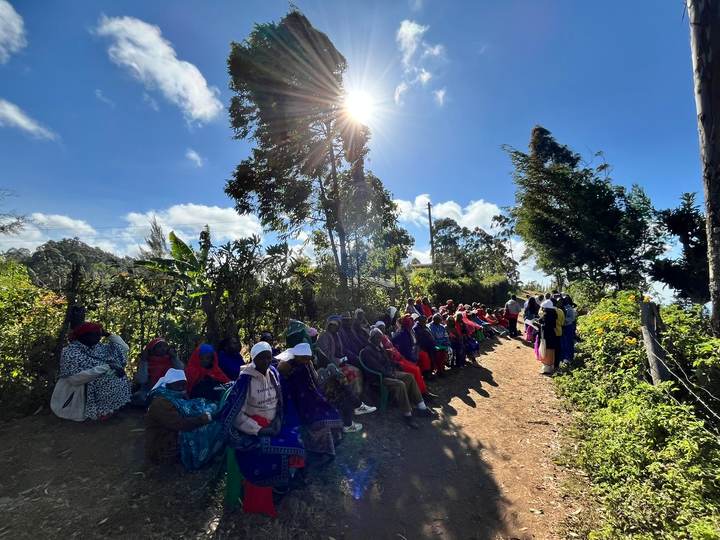
In 2026, I designed and led an original survey of 635 women, 17 religious leaders, and 4 focus groups in Maua, Meru County, Kenya, for my job market paper.